Sizing stepper motors for a linear axis
Holding torque is the number everyone reads and the one that says the least. This guide walks through the calculation that actually decides whether an axis skips steps.
IntermediateTarget budget €300.00From €31.13 with the cheapest option at every step
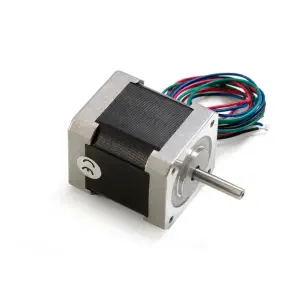
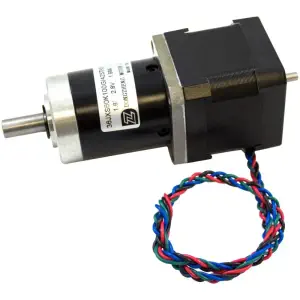
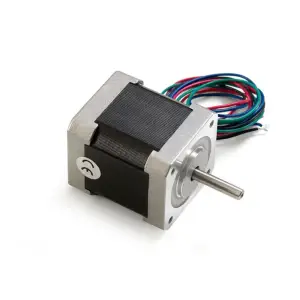
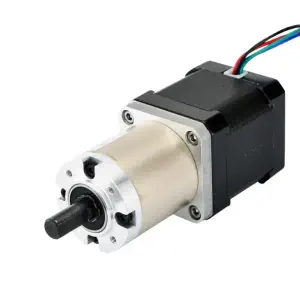
1.The motors
Torque falls with speed, and the published holding torque applies at zero speed. What matters is the torque still available at your working speed, which the manufacturer publishes as a speed and torque curve. A motor chosen on holding torque alone typically loses half of it by the time the axis is moving usefully.
Assembly
- Compute the required torque from the moving mass, the acceleration and the lead of your screw or the pitch of your belt.
- Read the torque available at your target speed on the speed and torque curve, not the holding torque.
- Keep a margin of at least 40 percent between the two, since friction rises as the machine wears in.
- Prefer a larger frame size at lower current over a small motor pushed to its limit, which mostly produces heat.
2.Drivers
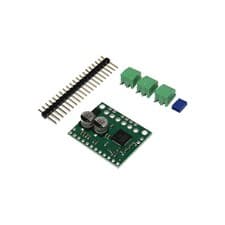
The driver sets the current, and the current sets the torque and the heat. Microstepping smooths the motion and reduces the torque available per step, so a high microstep setting on a marginal motor is a way to lose steps quietly.
Assembly
- Set the current limit to the motor's rated phase current, measured on the driver reference, before the first move.
- Check the driver's supply voltage ceiling against your power supply, since the margin is often small.
- Give every driver a heatsink and moving air, because thermal shutdown mid-move looks exactly like a lost step.

3.Transmission
Belt and pulley is cheap, fast and backlash-prone under reversal. A lead screw is slower, holds position under load and adds friction. The choice changes the torque calculation from the first step, so make it before you buy the motors.


4.End stops
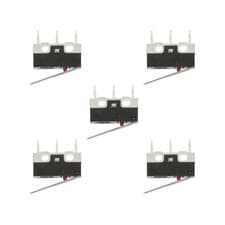
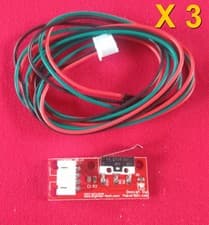
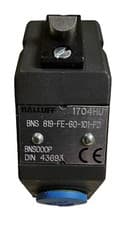
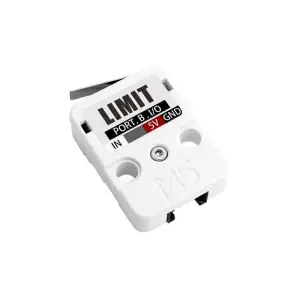
An open-loop axis has no idea where it is at power-on. Mechanical switches are cheap and repeatable to a few tenths of a millimetre. Optical and inductive sensors repeat better and cost more.
Parts are selected by the search engine on price, stock and specifications, never on affiliate commission. Robotitem does not test these products.