A brushless drivetrain for a heavy mobile robot
Above ten kilograms, brushed gear motors stop being practical. This guide covers what changes when you move to brushless, including the parts that have no equivalent on a small robot.
AdvancedTarget budget €900.00From €83.65 with the cheapest option at every step
1.Motors× 2
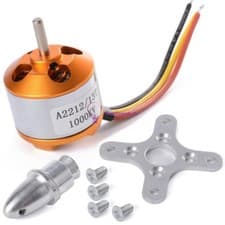
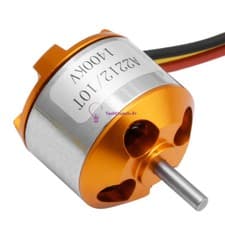
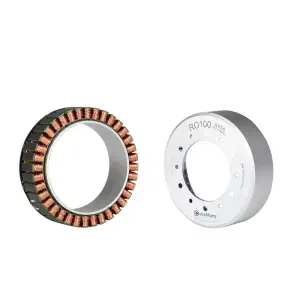
A brushless motor with a low KV rating turns slowly and pulls hard, which is what a drivetrain wants. High KV motors are built for propellers and need a reduction stage to be usable on wheels. Hub motors integrate the reduction and the bearing and remove most of the mechanical design work.
Assembly
- Compute the wheel speed you need, then divide by your wheel circumference to get revolutions per minute.
- Divide that by your pack voltage to get the KV rating that suits, and pick below it rather than above.
- Check the shaft diameter and the mounting pattern against your wheel hubs before ordering.

2.Controllers with position feedback× 2
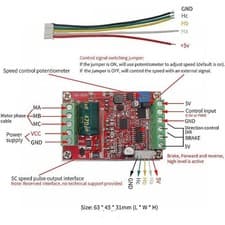
A hobby ESC has no idea where the rotor is at low speed and stutters on start. A field-oriented controller with an encoder or a hall sensor input gives smooth torque from zero, which a robot needs and an aeroplane does not. Regenerative braking is the second reason to prefer them on a heavy robot.
eBayIn stock
Contrôleur Moteur Brushless 400W Accessoires Brushless Motor Controller
€28.70
View at seller ↗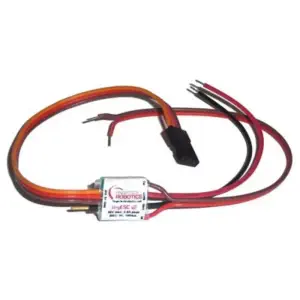
RobotShopIn stock
Contrôleur de Moteur Brushless 6,5 à 36V, 1A Tiny V2
€31.93Rated 4.5 out of 5, 4 reviews
View at seller ↗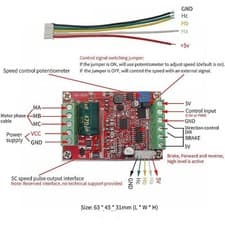
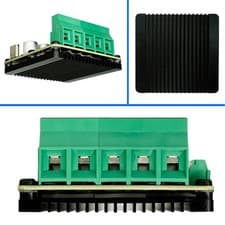
3.Emergency stop and contactor
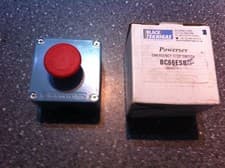
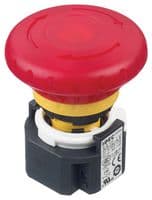
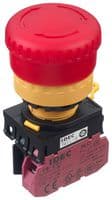
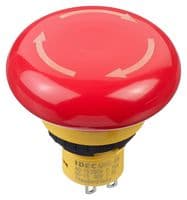
A robot of this mass needs a way to cut motor power that does not go through software. A latching mushroom switch driving a contactor on the pack side is the usual arrangement. The logic stays powered so the robot can report why it stopped.
Assembly
- Rate the contactor above the stall current of every motor together, not above their nominal draw.
- Wire the mushroom switch as normally closed, so a broken wire stops the robot instead of disabling the stop.
- Place the switch where it can be reached from outside the robot's reach envelope.
4.Wiring and connectors
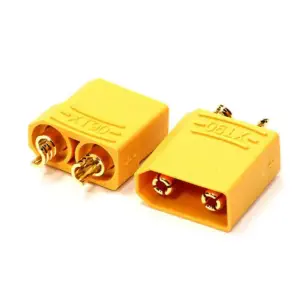
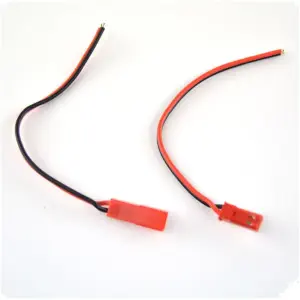
Currents in this class turn undersized wire into a heater and a marginal connector into a failure point. Size the conductors on the continuous current with a temperature margin, and use connectors rated for the peak rather than the average.


Parts are selected by the search engine on price, stock and specifications, never on affiliate commission. Robotitem does not test these products.