Working out the power budget of a mobile robot
Run time is decided long before the battery is chosen. This guide goes through the arithmetic, then lists the parts that come out of it.
IntermediateTarget budget €250.00From €39.57 with the cheapest option at every step
1.Add up the loads before buying anything
Drive motors dominate on a rolling robot, and they draw close to nothing when stationary and several amps on a carpet or a slope. Compute is a constant background draw. Sensors are usually negligible until you add a LiDAR, whose motor runs continuously.
Assembly
- Measure the real drive current on your worst surface rather than using the datasheet nominal figure.
- Add the compute draw at full load, since a robot that navigates is a robot whose processor is busy.
- Multiply the total by your target run time in hours to get the watt-hours you need.
- Add 30 percent, because a lithium pack that is regularly emptied to zero ages several times faster.
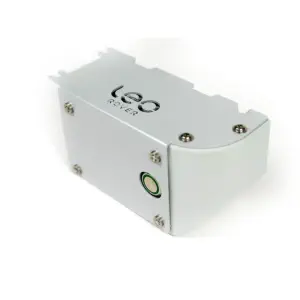
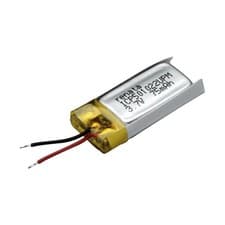
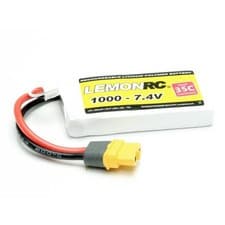
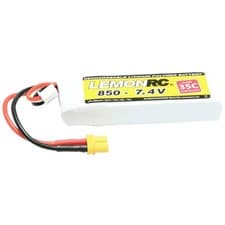
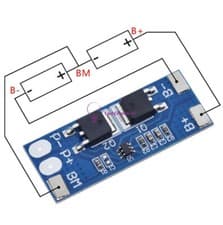
2.Protection board
A lithium pack without a battery management system is a fire waiting for a bad cell. Buying a pack with the BMS built in moves that risk off your bench. If you build the pack, the BMS is not optional and its cell count has to match the pack exactly.


3.Regulation
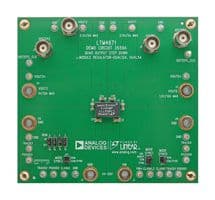
Most robots need at least two rails: the raw pack voltage for the motors and a regulated rail for the logic. Size the regulator on the peak logic draw and keep its input away from the motor wiring, because switching noise on a shared rail resets processors.
Assembly
- Use a switching regulator rather than a linear one above a couple of watts, since the difference is dissipated as heat.
- Run the motor return current on its own conductor back to the pack, and not through the logic ground.
- Put the bulk capacitance at the motor driver, which is where the current step happens.
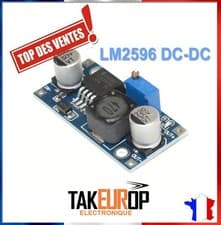
eBayIn stock
LM2596S (HW-411) DC-DC 3A Buck Convertisseur Réglable Step-Down Module Arduino
€5.49
View at seller ↗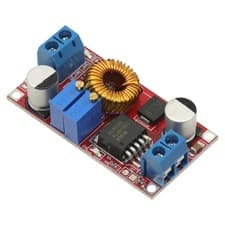
eBayIn stock
5A DC-DC CC CV Step Down Modul Konstantstrom-Funktion Power Converter
€1.76
View at seller ↗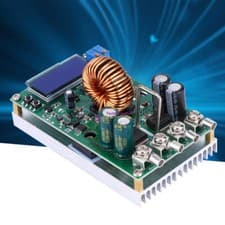
4.Charger
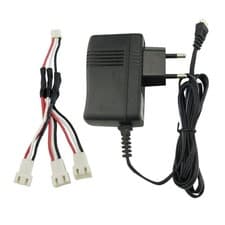
Match the charger to the chemistry and the cell count of the pack, and to nothing else. A balance charger is worth its price on any multi-cell lithium pack, since one cell drifting out of line is how a pack starts failing.
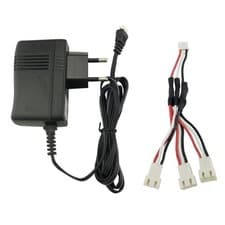
eBayIn stock
chargeur de batterie lipo + 3 en 1 ligne de charge pour syma x8sw x8sc x8c x8hw
€14.80
View at seller ↗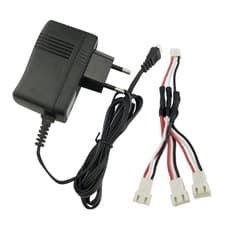
eBayIn stock
chargeur de batterie lipo + 3 en 1 ligne de charge pour syma x8sw x8sc x8c x8hw
€17.46
View at seller ↗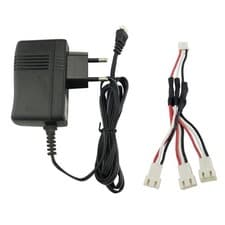
Parts are selected by the search engine on price, stock and specifications, never on affiliate commission. Robotitem does not test these products.